
Makeup can feel deceptively simple until we actually try to perfect it ourselves. Between mismatched foundation shades, confusing product choices, and techniques that never quite translate from tutorials, it’s easy to feel stuck in a cycle of trial and error. Thankfully, makeup classes in Singapore offer a way out of this conundrum. Learning directly from professionals not only accelerates the process, but also gives us clarity on what works, what doesn’t, and more importantly, why. For those considering a more serious pursuit, structured programmes and recognised certifications can also serve as a meaningful springboard into the beauty industry.
Of course, not all courses are created equal. Some prioritise flexibility and personalisation, while others focus on industry readiness or certification pathways. To help narrow things down, we’ve also included practical tips on how to choose the right course, what to expect from different formats, and key considerations to keep in mind before committing.
Quick Picks: Best Makeup Classes in SG to Elevate Your Makeup Routine
If we’re short on time, here’s how we’d quickly narrow things down based on what matters most:
- Best for aspiring professionals: Courses with structured certification pathways and industry-aligned training that prepare us for real client work.
- Best for natural makeup lovers: Programmes that emphasise subtle techniques and skin-first approaches rather than heavy, full-glam looks.
- Best for flexible learning: Modular or one-to-one classes that allow us to learn at our own pace without rigid schedules.
- Best for globally recognised credentials: Academies offering certifications that carry weight beyond Singapore, ideal for long-term career mobility.
- Best for real-world experience: Courses that include mentorship, live projects, or on-set exposure to bridge the gap between learning and practice.
1. The School of Make Up
Best for: Aspiring professionals who want structured, certification-led training
Estimated price: From $400++ to $3,000++
Website: http://www.theschoolofmakeup.com/
Location: 19 Keppel Road, Jit Poh Building #01-02, Singapore 089058 / Tanjong Pagar MRT, ~8–10 minutes’ walk
Why it made the list:
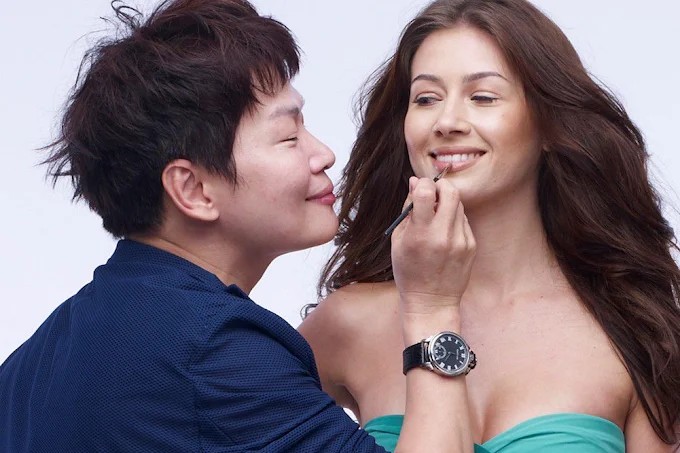
With nearly three decades of experience under its belt, The School of Make Up positions itself as a serious training ground rather than a casual learning space, and we think that distinction matters. This is where we would point anyone who isn’t just dabbling, but actively considering a longer-term commitment to the craft. Its programmes are clearly built with progression in mind, starting from foundational personal grooming sessions all the way to industry-recognised certifications.
We particularly appreciate how its personal make up course in Singapore doesn’t feel like an afterthought. The one-to-one format gives it a tailored, almost consultative feel, covering everything from colour theory to product selection in a way that feels genuinely practical. However, the real draw lies in its certification tracks. These deliver not just on technique since they are primarily designed to mirror real-world expectations, combining artistry with professionalism. The inclusion of service excellence training, while seemingly tangential, actually reinforces a crucial truth: in beauty, client experience is just as important as technical skill.
What to note:
The structured pathway can feel slightly rigid, especially with prerequisites like the WSQ Service Excellence Essentials course. If we’re only looking for a casual or exploratory class, this may come across as more intensive and time-consuming than necessary.
2. Makeup Course
Best for: Natural, minimalist makeup enthusiasts and bridal-focused learners
Estimated price: From $200++ to $2,500++
Website: http://www.makeupcoursesingapore.com/
Location: 20 Upper Circular Road, #01-19/20 The Riverwalk, Singapore 058416 / Clarke Quay MRT, ~3–5 minutes’ walk)
Why it made the list:
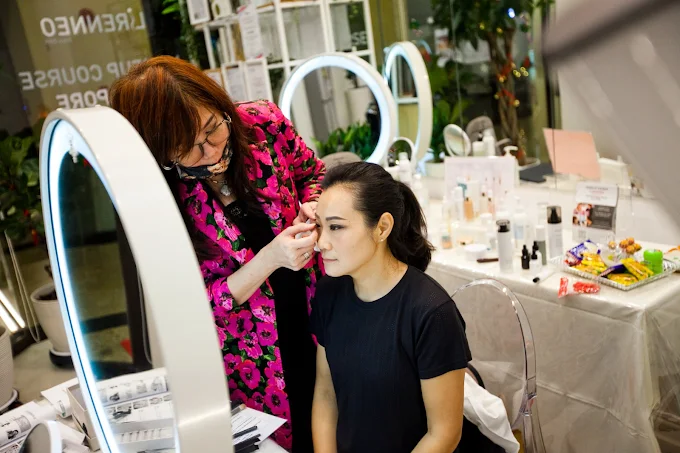
Makeup Course Training Institute feels far more personal in its approach, largely because it is shaped by the philosophy of its founder, Liren Neo. Rather than chasing trends or overloading students with techniques, the teaching here is grounded in a clear aesthetic: understated, natural beauty. For us, this is especially refreshing in a space that often leans towards maximalism.
The highlight of the brand is undeniably their signature “no concealer” technique. It challenges conventional routines and forces us to rethink how we approach base makeup altogether. For those drawn to softer, more skin-forward looks (particularly brides or those entering bridal makeup), this methodology offers a distinct edge. Courses are also kept intentionally small, which allows for closer guidance and a more responsive learning environment.
There’s a good balance between structured WSQ-certified programmes and more flexible personal courses, meaning we can choose how deep we want to go. The 4-day concise course is worth noting as well as it provides a comprehensive option for those who want results without committing long-term.
What to note:
The strong emphasis on a singular philosophy “less is more” may not appeal to those who prefer versatility or full-glam techniques. Additionally, being required to bring our own makeup kit can be inconvenient, especially for beginners who may not yet have the right tools or products.
3. Bloom by Roseanne
Best for: Flexible, personalised learning that fits around busy schedules
Estimated price: From $150++ to $2,000++
Website: http://www.bloombyroseanne.com/
Location: 450 North Bridge Road, #05-01, Singapore 188732 / Bugis MRT, ~5–8 minutes’ walk
Why it made the list:
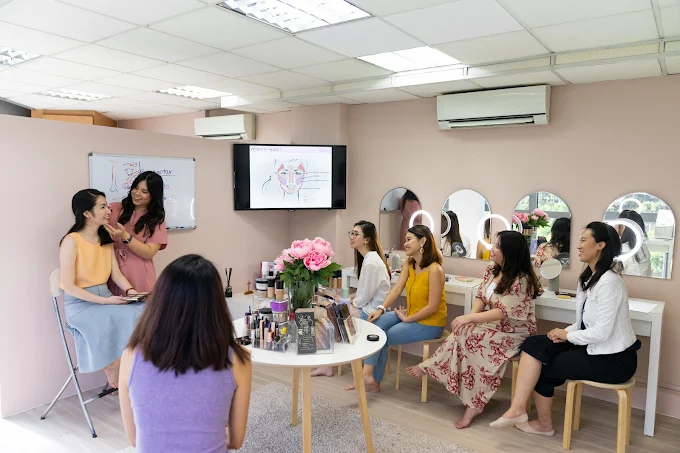
Bloom by Roseanne leans heavily into customisation, and we think that’s exactly where it shines. Rather than locking us into rigid syllabuses, it offers a modular approach that feels far more in tune with how most of us actually want to learn: focusing on what we need, when we need it. The one-to-one lessons are quite appealing for their adaptability since whether one is a complete beginner or simply looking to refine specific techniques, the absence of a fixed lesson plan allows for a far more efficient and targeted experience.
The Bloom Revolution courses are another highlight. Breaking lessons into digestible 1.5-hour sessions that can be spaced out over months makes this an easy fit for working professionals. It’s less about cramming knowledge and more about building skills gradually, which often leads to better retention. For those ready to go all in, the Ultimate Course bundles everything into a comprehensive journey—from foundational techniques to more advanced applications—complete with tools and structured notes. It’s a thoughtful ecosystem that supports both casual learners and serious enthusiasts alike.
What to note:
The pay-as-you-go flexibility comes with a trade-off: costs can add up if we take multiple sessions. Additionally, the strict no-refund policy may feel limiting, even if rescheduling options are relatively accommodating.
4. D’Rose International Academy
Best for: Globally recognised certification and career-focused training
Estimated price: From $500++ to $4,000++
Website: http://www.drosemakeup.com/
Location: 17 Phillip Street, #09-00 Grand Building, Singapore 048695 / Raffles Place MRT, ~4–6 minutes’ walk)
Why it made the list:
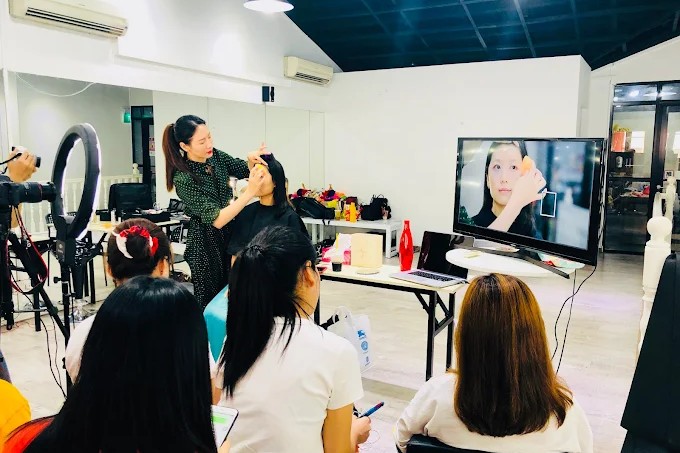
D’Rose International Academy takes a more traditional, career-oriented approach, and we see its appeal immediately for those who want credentials that travel far. Its programmes are clearly designed with industry entry in mind, combining structured theory with hands-on practice in a way that feels both comprehensive and intentional. From foundational personal makeup classes to full-fledged professional tracks, there’s a clear progression pathway that mirrors how one might realistically build a career.
The brand is known for its emphasis on internationally recognised qualifications, particularly the VTCT (ITEC) certification. For anyone considering work beyond Singapore or simply wanting a credential that carries weight, this adds a layer of credibility that not all schools can offer. The curriculum itself balances technical precision with creativity, ensuring we’re not just learning how to replicate looks, but also how to adapt to trends and client needs. It’s this blend of discipline and flexibility that makes the academy a compelling choice for long-term growth.
What to note:
The structured, certification-heavy approach may feel overly formal for those who are simply exploring makeup as a personal skill. Additionally, the commitment required both in time and cost can be significant compared to shorter, more casual courses.
5. The Suburbs Studio
Best for: Real-world, industry-facing experience in fashion and commercial makeup
Estimated price: From $250++ to $3,500++
Website: https://www.suburbs-studio.com/
Location: 24 Sin Ming Ln, #06-100 Midview City, Singapore 573970, Bright Hill MRT
Why it made the list:
If we’re looking for something that feels immediately relevant to the professional world, The Suburbs Studio is undoubtedly our go-to with its strong industry grounding. The brand operates within the ecosystem of fashion, editorial, and commercial production, and that influence is evident in how its courses are structured. Students are not just learning techniques in a vacuum as they are guaranteed to be exposed to how makeup functions under real production conditions.
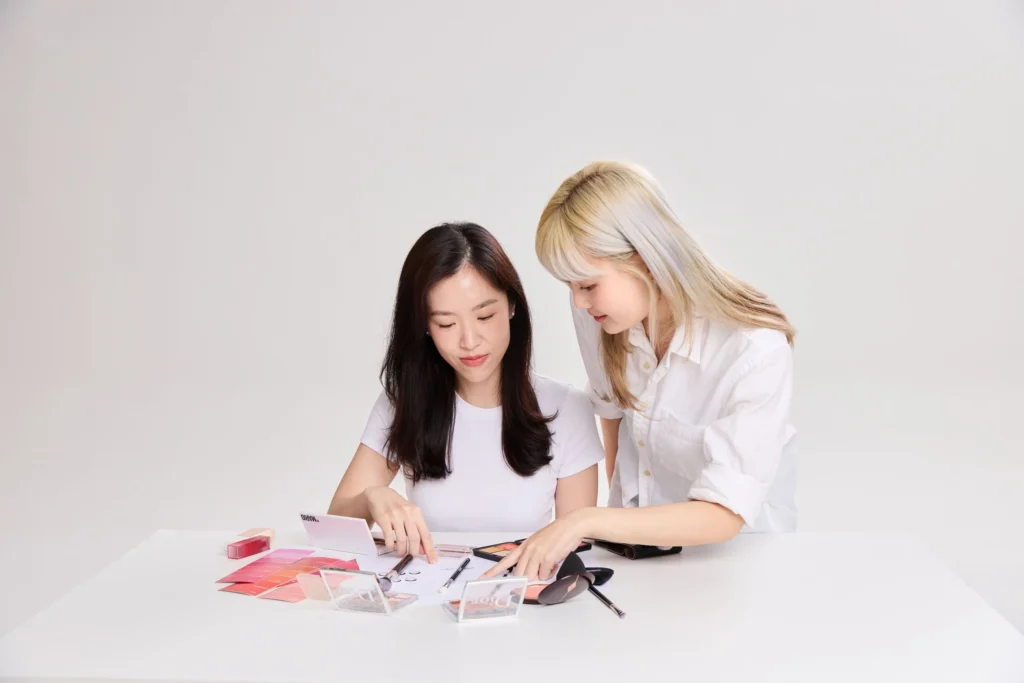
Their one-to-one class is refreshingly pragmatic. Instead of overwhelming us with trends or unnecessary steps, it focuses on refining what actually works for our features and routine. It’s a corrective, almost diagnostic approach that feels particularly useful if we’ve been relying on trial and error. On the professional side, the Hair & Makeup Artistry Programme goes several steps further by integrating mentorship and on-set experience. The opportunity to assist on live shoots is a rare inclusion—and one we think makes a tangible difference in bridging the gap between learning and doing.
What to note:
The emphasis on industry readiness may feel too niche for those who simply want everyday makeup skills. Limited session availability can also make scheduling slightly competitive, especially for those with tighter timelines.
How We Settled on These Professional Makeup Courses
Not every makeup course deserves a spot on our list. We approached this with a clear editorial lens, focusing on options that offer genuine value depending on what we might be looking for, whether that’s personal improvement or professional growth.
- Curriculum depth and structure – Does the course offer a clear progression, or is it overly surface-level? We favoured programmes that balance theory with hands-on application.
- Instructor credibility – Experience matters. Courses led by working professionals or established educators tend to provide more relevant, real-world insights.
- Learning format and flexibility – From one-to-one sessions to modular classes, we looked at how adaptable each course is to different schedules and learning preferences.
- Industry relevance – For professional tracks, we prioritised programmes aligned with current trends, client expectations, and actual working conditions.
- Certification and recognition – Where applicable, recognised qualifications were a strong plus, particularly for those considering a career switch.
How to Choose the Right Makeup Course
Choosing the right course ultimately comes down to understanding what we want to get out of it. A mismatch here often leads to frustration as well as wasted time and money.
- Define your goal first – Are we learning for personal use, or aiming to go professional? This determines whether a short course or certification track makes more sense.
- Consider your preferred learning style – Some of us benefit from structured programmes, while others thrive in flexible, pick-and-mix formats.
- Look at class size and attention – Smaller groups or one-to-one sessions often translate to more personalised feedback.
- Check what’s included – From tools and products to post-course support, these details can significantly affect overall value.
- Assess long-term relevance – Especially for professional courses, we should consider whether the skills taught align with current industry demands.
What You’re Really Paying for in a Makeup Course
It’s tempting to compare courses purely based on price, but we’ve found that what we’re actually paying for goes far beyond the number of hours. A well-designed course offers structured guidance, curated techniques, and direct feedback, which are difficult to replicate through self-learning.
More importantly, there’s the value of correction. Having a professional point out subtle mistakes can dramatically improve results in a short time. In professional courses, we’re also paying for exposure to industry workflows, hygiene standards, and client interaction skills, all of which are essential but often overlooked.
Are Certification-Based Makeup Courses Worth It?
The short answer: it depends on one’s goals. If we’re simply looking to improve our daily routine, a certification course may feel excessive. However, for anyone considering freelance work, bridal makeup, or joining the beauty industry, certifications can provide both credibility and structure.
They also tend to enforce a more disciplined learning process, covering not just artistry but professionalism: communication, hygiene, and service standards. That said, we should view certification as a complement to skill, not a replacement for it. Practical experience and a strong portfolio still carry significant weight in this field.
Final Thoughts
For us, choosing a makeup course that’s right for you starts with being honest with where you are right now. If you’re still struggling to make your everyday routine work, you’ll likely benefit more from guided, hands-on correction. Otherwise, if you already feel confident and want to focus on specific areas or perhaps turn that interest into becoming a makeup artist, then tailored classes, certification-led programmes and industry-facing training will naturally make more sense.
The main thing to focus on is alignment. The right course should feel like it removes confusion and doesn’t add to it, whether that’s through clearer techniques, better product understanding, or simply learning how to work with your own features instead of against them. When you choose with intention rather than impulse, you’re far more likely to walk away with skills that actually stick.
Frequently Asked Questions (FAQ)
1. Can I use SkillsFuture credits to offset the tuition fees for these programs?
Many private makeup academies in Singapore are SkillsFuture-approved, allowing Singaporeans aged 25 and above to utilize their credits for eligible short courses. You should verify the specific course code on the MySkillsFuture portal, as accreditation can vary between a school’s hobbyist workshops and its professional certification tracks.
2. Do these courses typically require students to provide their own models for practical sessions?
While personal grooming classes focus on self-application, advanced skill-building courses often require you to practice on different face shapes and skin types. Some academies maintain a roster of volunteer models for a fee, while others expect students to source their own or practice on classmates to experience varied skin textures.
3. Are there additional costs for professional-grade kits beyond the listed course fees?
Tuition often covers the use of in-house studio products during class, but students are usually expected to own a personal set of professional brushes for hygiene reasons. If a course includes a “starter kit,” clarify whether these are full-sized professional products or sample-sized items intended only for the duration of the module.